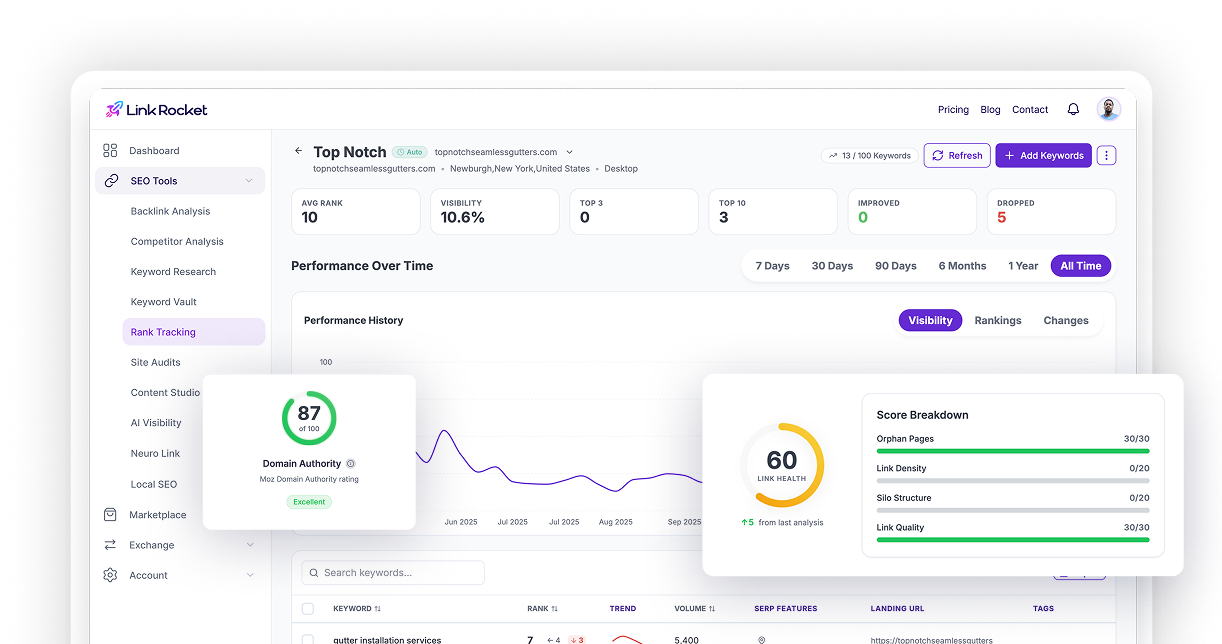
Keyword Rank Tracking: How to Do It Right
Three weeks into a new SEO push, someone asks the obvious question: “Is it working?” And you realize you don’t actually know. You feel like traffic is up. Maybe. That gap — between feeling and knowing — is the entire reason rank tracking exists.
Rank tracking tells you, for the keywords that actually matter to your business, whether you’re climbing or slipping. Done well, it’s an early-warning system and a scoreboard at once. Done badly, it’s a daily source of anxiety over noise. The difference comes down to what you track, how often, and whether you act on the trend instead of the twitch.
What rank tracking really does
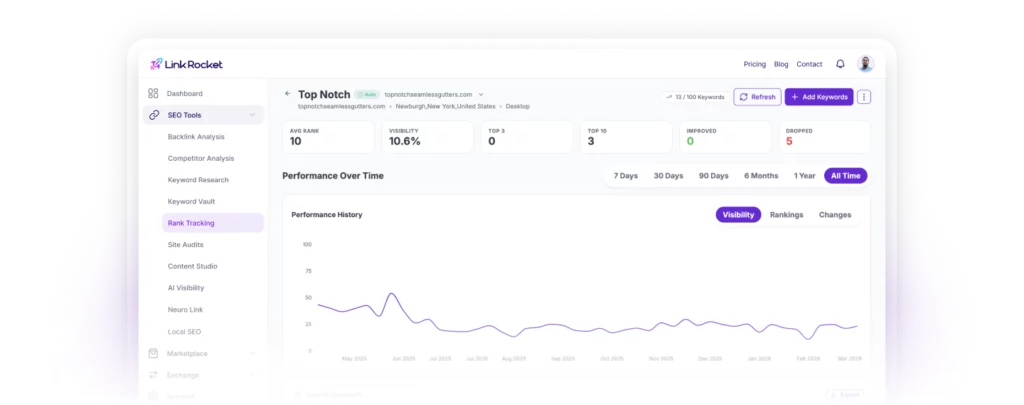
It monitors where your pages sit in search results for specific keywords, on a set schedule, and records the movement over time. That last part is everything. Googling your own term and eyeballing the result doesn’t count — the results are personalized to you, they shift by location, and a single check tells you nothing about direction. A tracker checks from a neutral position, on a cadence, and gives you the line instead of the dot.
Track less than you think
The instinct is to track everything. Resist it. A bloated list of 500 keywords buries the ten that pay your bills. A good list is short and deliberate:
- Money keywords — the terms that drive leads and sales, not the vanity phrases that just feel good to rank for.
- A head-and-tail mix — the big competitive terms plus the specific long-tail ones that quietly convert.
- Competitors — a couple of rivals on the same keywords, so you can tell whether a dip is you or the whole results page shifting.
- The right location and device — if you’re local or mobile-heavy, national desktop rankings are close to meaningless.
Daily or weekly? (Mostly weekly.)
This is where people torture themselves. Daily tracking feels diligent, but rankings wobble a position or two every day for no reason at all — and reacting to that noise means changing things that were never broken. Weekly smooths the jitter and shows real movement.
Track daily only when something is genuinely in motion: a launch, a migration, a suspected penalty, a major algorithm update. The rest of the time, weekly is calmer, cheaper, and just as informative. A tracker like LinkRocket’s lets you set that cadence and just watch the trend build — daily when it counts, weekly when it doesn’t.
Setting it up
- Pick your list — start with 20 to 50 keywords that genuinely matter, not 500.
- Set location and device to match your real audience.
- Add a competitor or two for context.
- Choose a frequency — weekly for most.
Reading it without overreacting
Look for sustained direction, never single-day moves. A keyword sliding steadily for three weeks is a signal worth chasing. One that dropped yesterday and bounced back today is noise, and acting on it just adds chaos. When something genuinely moves, line it up against what you changed and against your backlink and content activity — the cause is almost always in there. And check whether the drop is site-wide or just one page: that single distinction tells you whether you’re chasing a technical problem or a content one.
Why tracking in isolation falls short
Here’s the trap with a standalone rank tracker: it tells you the what and leaves you guessing at the why. A keyword drops — lost backlink? A competitor’s new content? A technical slip? A separate tracker can’t say, because the answers live in other tools.
Which is the real case for tracking where the rest of your SEO data already is. In LinkRocket your rankings sit next to your backlink analysis, site audit, and AI-visibility tracking, so when a position moves you can see what moved with it — no exporting spreadsheets to correlate cause and effect by hand. (Dedicated trackers like AccuRanker, and the big suites like Ahrefs and Semrush, all track well too. The question is whether you want the ranking data stranded on its own, or sitting beside the reasons behind it.)
The short version
Rank tracking turns “I think it’s working” into “here’s the trend.” Track a tight list of keywords that actually matter, match location and device to your audience, and watch a competitor or two for context.
Weekly beats daily for most sites — real movement, not noise. And the number itself is never the point. The value is being able to line a change up against what caused it, which is far easier when your rankings, backlinks, and audits live under one roof.
Frequently asked questions
What is keyword rank tracking?
Rank tracking monitors where your pages appear in search results for specific keywords over time, on a schedule, so you can see whether your rankings are improving or declining rather than relying on manual, personalized searches.
How often should I track rankings?
Weekly suits most sites and filters out day-to-day noise. Switch to daily during active periods — a launch, migration, suspected penalty, or major algorithm update — when catching changes quickly matters.
Is daily rank tracking worth it?
Only situationally. Rankings fluctuate a position or two daily, so daily tracking mostly shows noise and can prompt overreaction. It’s valuable during active changes but overkill for steady-state monitoring.
How many keywords should I track?
Start with a focused set — often 20 to 50 terms that genuinely drive leads or sales — rather than hundreds of vanity phrases. A tight, meaningful list is easier to act on and cheaper to track.
Are there free rank trackers?
Google Search Console is the main free option: it shows the average positions of queries you already rank for, though with limited keywords and slow updates. Dedicated rank trackers, LinkRocket’s included, are paid features, so growing sites usually graduate to one for steady weekly monitoring.
Stop guessing, start tracking
SEO without rank tracking is flying blind. Track your keywords with LinkRocket — alongside your backlinks, audits, and AI visibility — so you see not just where you rank, but why it’s moving.