Backlink Exchange
Backlink Exchange: Build Links by Giving Links
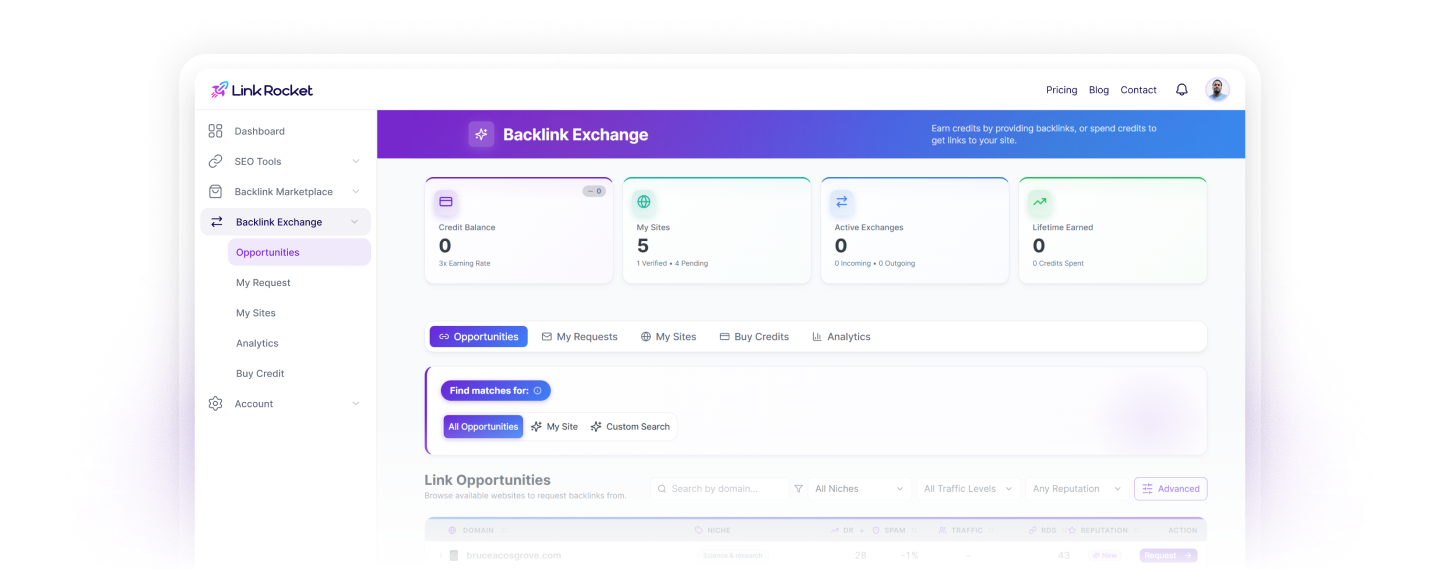
Backlink Exchange is a credit-based ecosystem where you earn credits by providing backlinks from your sites and spend credits to get quality links pointing back to yours.

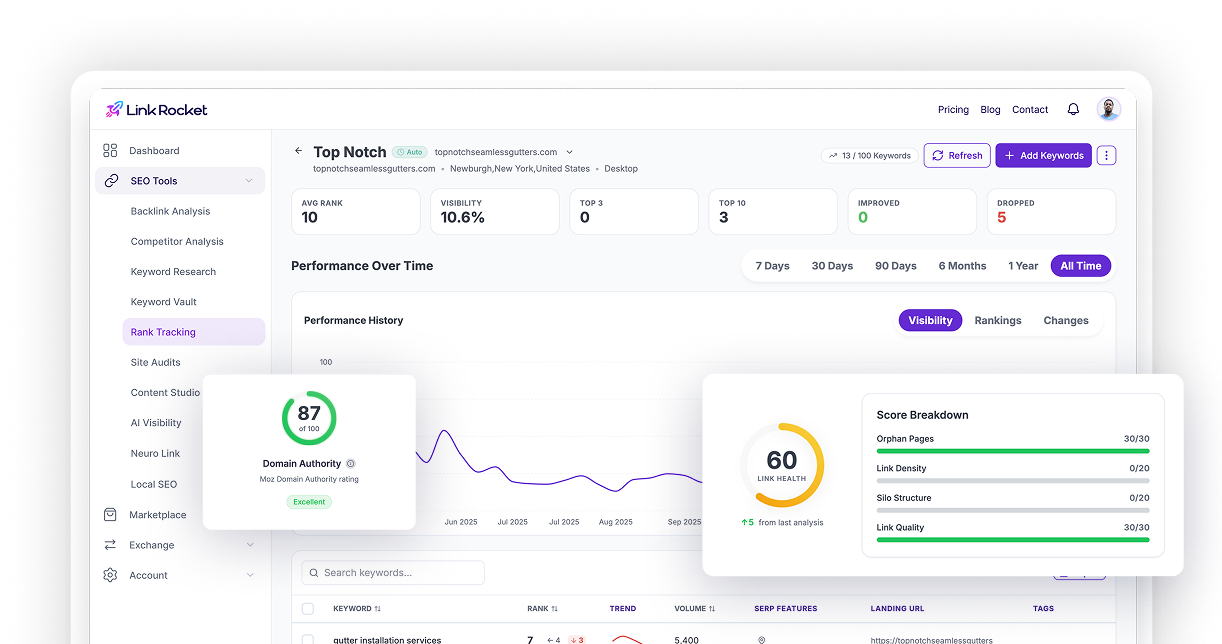
Track backlink performance
Get actionable insights from user behavior
Monitor all your exchanges
The Challenge
Strategic Link Building, Simplified
Unlike traditional exchanges, LinkRocket runs on a credit-based system: you earn Exchange Credits by placing links for other members, then spend those credits on placements for your own sites. Every site is checked for DR, DA, spam score, and niche fit before it’s eligible, so what you build stays relevant and worth having.
For every backlink you create for another member, you earn credits you can spend to request backlinks for your own sites or clients.

Why It’s Better?
Leave Behind Spreadsheets, Cold Emails, and Link Penalties
Traditional link building means endless email chains and link quality you can’t verify until it’s too late. LinkRocket replaces that outreach grind with a credit-based system that delivers:

Relevance
Links from websites in your niche with verified traffic

Safety
Verified sites, reputation scoring, and automatic link checks

Scalability
Consistent flow of opportunities that grows with your needs

Efficiency
Automated matching that eliminates manual outreach
Whether you’re handling SEO for your own brand or managing dozens of client campaigns, LinkRocket streamlines your backlink strategy for maximum impact with minimum effort.
Traditional vs LinkRocket
LinkRocket is Smarter Than Traditional Link Building
Ditch the outdated tactics. LinkRocket gives you a faster, more scalable way to build high-quality backlinks — without the cold email grind.
Features
Link Placement Control
Safety from Google Penalties
Time Required
Exchange Flexibility
Matching Quality
Reporting & Tracking
Scalability
❌ Manual Outreach
Limited or unpredictable
Inconsistent, hard to vet
10-20 hours/week
Locked to one partner
Cold pitch hit or miss
Manual sheets/spreadsheets
Painful to scale manually
⚠️ Traditional Exchanges
Relies on cold outreach
Risk of detectable patterns
Time-consuming tracking
Limited Customization
Randomized site list
Limited or missing
Clunky Growth

How the Backlink Exchange works
You don’t need a budget to start. You need one site you own and a willingness to place a few links for other members first.
- Verify a site you own. Add it on the My Sites tab and confirm ownership with a DNS TXT record, a meta tag or an HTML file upload. Once it’s verified, other members can see it as a place to request links.
- Earn your first credits. Accept incoming requests that suit your site and place the links. Every link you place for another member earns you Exchange Credits.
- Browse the Opportunities feed. Sites are ranked by how closely their niche matches yours. Each listing shows the site’s DR, DA, estimated monthly traffic, spam score and niche.
- Send a request. Pick a site, click Send Request, and say which page you want linked and the anchor text you’d like. The request uses credits from your balance.
- Let LinkRocket check the link. After a link is placed, LinkRocket crawls the page to confirm the link is live and correct, then marks the exchange Completed. If the link goes missing later, an alert is triggered.
Link exchange vs. backlink exchange: what’s different here
A classic link exchange starts with an email to another site owner and a promise to link to each other. It’s slow, it depends on finding someone willing, and nobody checks whether the link is still there six months later.
LinkRocket’s Backlink Exchange runs on credits instead. Placing a link for a member earns you credits, and you spend those credits on placements for your own sites from the Opportunities feed.
The bigger difference is accountability. Every site has to pass ownership verification before it’s listed, and every placement is checked by a crawler. Each member also carries a Reputation Score based on how reliably they accept requests, place links correctly and keep them live. Members who keep failing to honor exchanges lose reputation and can have their accounts restricted.
How to choose exchange partners that actually help
More links isn’t the goal. Relevant links from real sites are.
Start with niche. The Opportunities feed already sorts sites by topical relevance, so the top of the list is usually the right place to look. Then check the numbers on each listing. Traffic tells you whether real people read the site, and a high spam score is a reason to move on. DR and DA give you a rough sense of authority, but treat them as a tie-breaker rather than the whole decision.
Before you send a request, it’s worth running the site through our backlink analysis tool. Its Risk Score and anchor text breakdown show whether the site’s own link profile looks healthy.
If you’d rather pay for a placement than earn credits, the Publisher Marketplace lists verified publishers that sell guest posts and link insertions.
Keeping your exchange account healthy
Running a site means there will be weeks when you can’t take requests. Vacation Mode pauses incoming requests without hurting your Reputation Score, and your active exchanges stay live while it’s on. If only one of your sites needs a break, Quick Pause hides just that site from the Opportunities feed.
The Exchange Analytics dashboard keeps score for you. It shows the credits you’ve earned and spent, your active and completed exchanges, your completion rate and how your reputation has changed over time.