Why Google Might Bury Your Page If No One’s Clicking or Staying
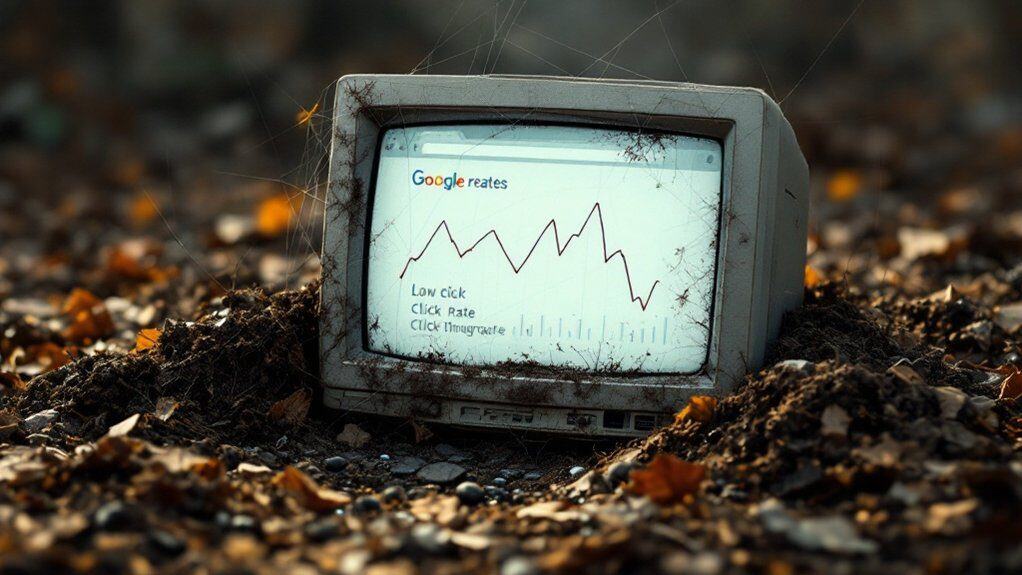
Google’s algorithm acts like a harsh nightclub bouncer, watching how visitors interact with websites. If users consistently bounce back to search results or spend mere seconds on a page, Google takes notice. Low click-through rates and brief dwell times signal that content isn’t delivering what users want. The search giant mercilessly demotes these underperforming pages in rankings. Understanding the metrics behind these algorithmic penalties reveals the path to better visibility.

While many website owners chase the elusive Google algorithm like a cat pursuing a laser pointer, the reality of page ranking involves concrete, measurable factors. Google pays close attention to how users interact with search results, and poor engagement metrics can send a website spiraling down the rankings faster than a lead balloon.
Think of it this way: when users click on a search result and quickly bounce back to Google, it’s like giving the webpage a tiny digital thumbs down. This behavior, known as pogo-sticking, tells Google that visitors didn’t find what they were looking for. And Google, being the sensitive soul it is, takes these rejection signals personally – on behalf of its users, of course. Establishing consistent posting schedules helps build trust with both users and search engines.
Quick bounces back to search results are like leaving a one-star review in Google’s guestbook – and Google takes notes.
Dwell time matters significantly. When visitors stick around to actually read content, it signals to Google that they’ve found something worthwhile. But if they’re fleeing your site faster than teenagers at a parent-chaperoned dance, Google notices. The search engine isn’t just counting clicks; it’s measuring satisfaction through time spent, pages viewed, and general engagement. High-quality multimedia elements like videos can significantly boost these engagement metrics.
The click-through rate from search results pages plays a vital role too. If your page appears in search results but gets ignored like a vegetarian at a barbecue, Google will eventually get the message. Low click-through rates suggest a disconnect between what users want and what your page appears to offer. Analyzing your site’s Domain Authority using tools like Moz Pro can help identify opportunities to improve visibility.
But it’s not just about user behavior. Google’s crawlers are constantly evaluating technical factors like page speed, mobile-friendliness, and proper indexing. A slow-loading page is about as welcome as a mosquito at a camping trip.
And if your site isn’t mobile-friendly in 2024? Well, that’s like showing up to a smartphone party with a rotary dial telephone.
Quality content remains king, but it needs to be findable, engaging, and technically sound. The days of keyword stuffing and hoping for the best are long gone. Now, it’s about creating content that actually serves a purpose and keeps visitors coming back for more.