Does Adding New Topics to Your Site Hurt SEO? What Google Actually Says
A gardening blog decides to start covering personal finance. A SaaS company that has only ever written about email deliverability publishes a guide to cold calling. Every time, the same nervous question surfaces in the marketing meeting: are we about to confuse Google and tank the rankings we spent years building?
It is a fair worry, and it comes up constantly. The short version is that expanding into new territory does not carry some hidden algorithmic penalty. But the longer version has real nuance, and getting it wrong is how sites end up with a sprawling archive that ranks for nothing.
Google has answered this directly, and the answer is boring
Googlers have addressed this question more than once, and the position has been consistent: there is no penalty for a site branching into new subjects. Google does not assign your domain a single “topic” and dock you for straying from it. Pages are evaluated largely on their own merits and against the other results competing for the same query.
So the fear of a site-wide relevance penalty is mostly a myth. What people mistake for a penalty is usually something more mundane: the new pages simply are not good enough to rank, and because there are now more of them, the site’s average quality looks worse. That is not Google punishing breadth. That is Google declining to reward thin work, which it would have done to a single-topic site too.
The useful reframe is this. Adding a topic does not dilute your existing authority. Your finance guides do not make your gardening pages rank worse. But your existing gardening authority also does not transfer to finance. You start that new topic from roughly zero, the same as any new site would.
What topical authority actually is (and why it is not a domain-wide score)
Topical authority gets talked about as if it were a number stamped on your domain. It is not. It is the accumulated result of covering a subject thoroughly, earning links and mentions within that subject, and satisfying the people who search for it. It builds cluster by cluster, not site by site.
Think about how expertise works in the real world. A cardiologist who publishes one blog post about tax law does not become a trusted tax source, no matter how respected they are in medicine. Their reputation is real, but it is domain-specific. Search works the same way. A site that dominates “best hiking boots” has earned trust in outdoor gear, not an all-access pass to rank for “mortgage refinancing.”
This is why the mini-site mental model is helpful. When you enter a new subject, treat that section as its own small site that has to earn its place: comprehensive coverage of the core questions, a sensible internal structure, and enough depth that a reader never needs to click back to Google to finish their research. Do that, and the new cluster starts to build its own authority. Skip it, and you have just added pages that sit there doing nothing.
Where expansion actually goes wrong
If there is no penalty, why do so many site owners swear that broadening their content hurt them? Usually one of a few things happened, and none of them are about topic diversity per se.
The most common failure is spreading effort too thin. A team that produced ten strong articles a quarter on one subject now produces the same ten articles across three subjects. Each cluster is now shallow, none reaches the depth needed to compete, and the whole site feels weaker. The problem was never the second and third topics. It was trying to cover them without the resources to cover them well.
The second failure is relevance drift inside your existing pages. Sometimes, in the rush to seem broader, teams start bolting loosely related tangents onto pages that used to be tightly focused. A crisp article about container gardening slowly accumulates paragraphs about backyard chickens and composting philosophy until it no longer cleanly answers the query it once ranked for. That is a real risk, and it is worth auditing for.
The third is neglect. New topics get all the attention while the pages that actually pay the bills go stale. Rankings on your bread-and-butter content slip, and it looks like the expansion caused it, when really it was just months of not touching your best material.
How to expand into new topics without shooting yourself in the foot
The safe version of expansion is not complicated, but it does require discipline. A few principles do most of the work.
Pick adjacent before distant. Topics that share an audience with your existing content are far easier to break into, because your current readers, links, and internal linking opportunities all lend a hand. A running blog moving into recovery and mobility has natural bridges to build. A running blog moving into cryptocurrency has none. Distant leaps are not forbidden, they are just slower and more expensive.
Launch a topic as a cluster, not a single post. One lonely article about a new subject signals nothing. A pillar page plus a handful of supporting pieces, interlinked, tells search engines you are actually trying to cover this properly. Plan the cluster before you write the first word.
Match the quality bar you already hold yourself to. The new stuff has to be as good as your best existing work, not a rushed afterthought. If you cannot resource it to that standard, it is better to delay the topic than to publish a weak version of it.
Keep tending the old garden. Refresh and defend your established content while the new clusters mature. Expansion should add to your footprint, not cannibalize the attention your winners need to stay winners.
Auditing before and after you branch out
Expansion is one of those decisions that benefits enormously from data instead of gut feel, and this is where a content audit earns its keep. Before you commit to a new subject, it helps to know whether your existing pages are genuinely healthy or quietly drifting, and after you launch, you want to know whether the new cluster is measuring up to what already ranks.
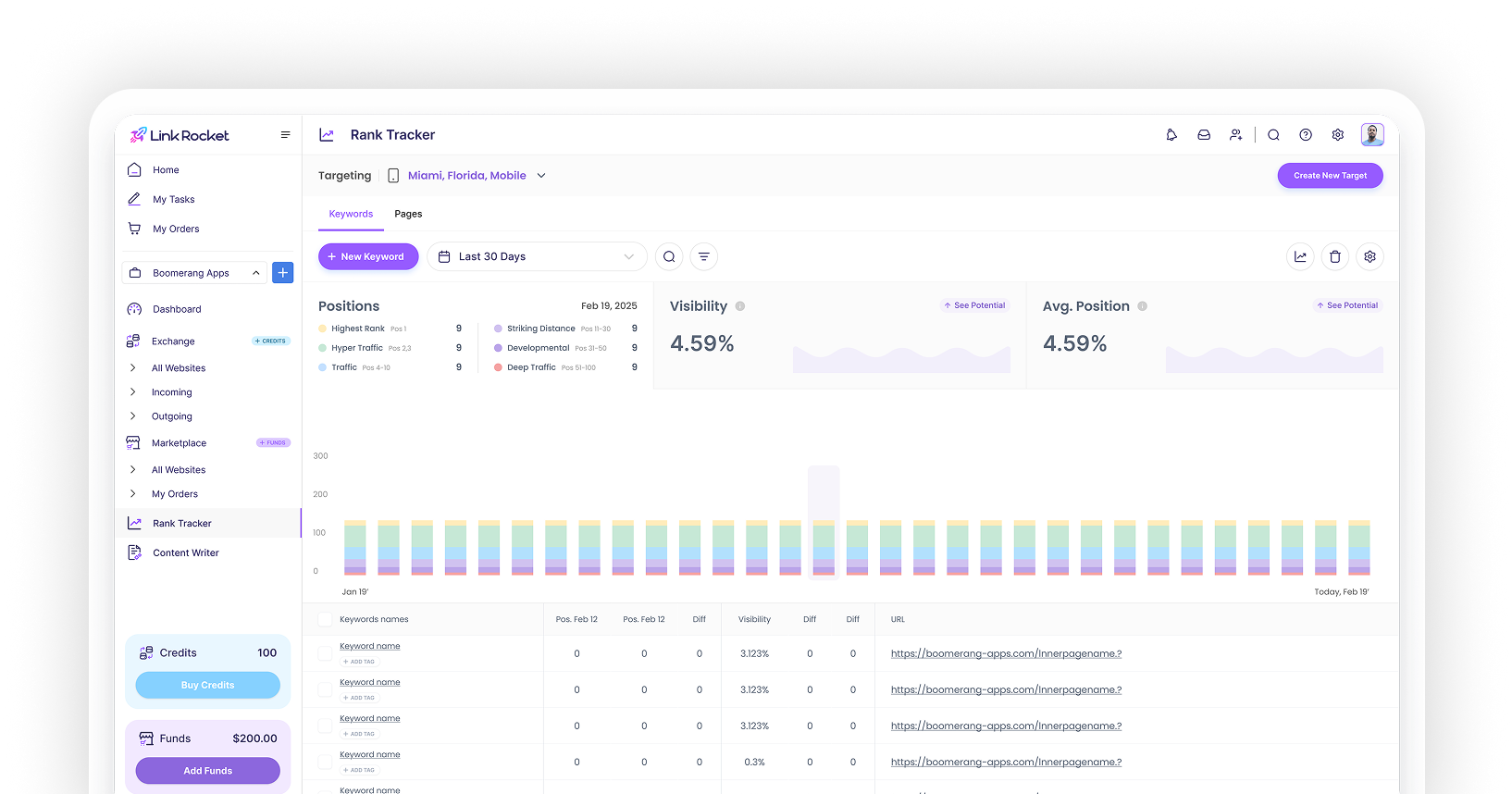
LinkRocket’s Content Studio includes a Content Audit tool built for exactly this kind of check. It scores your existing pages against the pages currently ranking on the first page for a target keyword, then classifies each one as Aligned, Drifting, or Irrelevant. That classification is a gift when you are expanding, because “Drifting” is precisely the signal that a page is losing focus, and “Irrelevant” flags content that has wandered off target entirely. You can add pages one at a time or bulk-import an entire sitemap, then re-run the audit after changes to see whether your edits actually moved the score.
The audit also does entity and topic gap detection, surfacing the concepts that competitor pages cover and yours miss. When you are building a brand-new cluster from scratch, that gap list is effectively a coverage checklist: it tells you what a thorough treatment of the subject is expected to include before you can realistically compete. Pair that with the Briefs tab, where you can generate a structured outline for each new article and hand the AI competitor URLs to learn from, and the whole “start a new topic like its own mini-site” idea becomes a repeatable process rather than a vibe.
None of this replaces the judgment call about which topics fit your brand. But it does turn the two riskiest parts of expansion, drifting old pages and shallow new ones, into things you can see on a dashboard instead of discovering three months later in your analytics. Running your keyword ideas through keyword research first, and studying how established players structure their coverage with competitor analysis, rounds out the picture before you write a word.
The honest bottom line on branching out
Adding new topics will not hurt your SEO. Adding new topics badly absolutely can, not because Google penalizes range, but because thin coverage, drifting pages, and neglected winners are all real ways to lose ground, and expansion is a fast way to do all three at once if you are careless.
Treat each new subject as a fresh authority-building project, resource it like you mean it, and keep an eye on the health of both the old and the new. Do that, and breadth becomes a strength: a bigger site that ranks across more of the queries your audience actually searches, rather than a bloated archive that ranks for none of them. The strategy has never been the enemy. Sloppy execution is.
Frequently asked questions
Does Google penalize websites for covering unrelated topics?
No. Google has stated there is no site-wide penalty for expanding into new subjects. Pages are judged largely on their own merits against the results competing for the same query. What looks like a penalty is usually just new pages that are not strong enough to rank, which drags down the site’s overall quality signals.
Will my existing site authority help my new topic rank faster?
Not directly. Topical authority is subject-specific, so your credibility in one area does not transfer to an unrelated one. A new topic starts from roughly zero and has to earn trust through thorough coverage, relevant links, and satisfied searchers, the same as a brand-new site would.
How many articles do I need to establish a new topic?
There is no fixed number, but a single post rarely signals authority. Launching a new subject as a cluster, a pillar page plus several interlinked supporting articles, tells search engines you are covering it seriously. Quality and depth matter far more than hitting a specific article count.
How do I know if adding topics is diluting my existing pages?
Run a content audit. LinkRocket’s Content Studio scores each page against the current top-ranking results and labels it Aligned, Drifting, or Irrelevant. Pages that slip to Drifting or Irrelevant are the ones losing focus, so you can fix or refocus them before they cost you rankings.
Should I choose closely related topics or is any topic fine?
Any topic is technically fine, but adjacent topics that share your existing audience are much easier and cheaper to rank for, because your current readers, links, and internal linking all help. Distant, unrelated topics are allowed but take longer and demand more resources to gain traction.
Ready to expand without the guesswork?
LinkRocket’s Content Studio gives you the content audit, gap analysis, and structured briefs to launch new topics like real mini-sites and keep your existing pages sharp. See exactly which pages are drifting and what a winning cluster needs before you publish.